A Closer Look at Leslie Sue Ritts
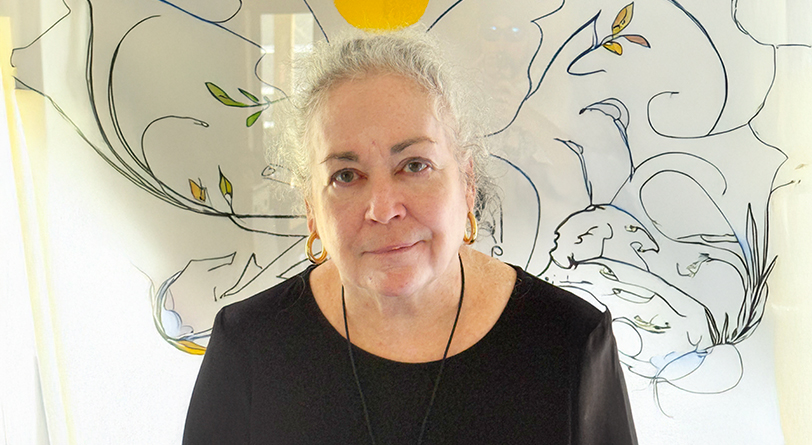
In each issue, FlexPack VOICE® interviews an industry leader or a professional who supports the Flexible Packaging Association (FPA) in its various efforts, such as industry advocacy. In this edition, we profile Leslie Sue Ritts of Ritts Law Group, PLLC, which is based in Alexandria, Virginia.
As a lawyer who has specialized in environmental law for more than 30 years, Ritts works with FPA’s Environmental, Health, and Safety (EHS) Committee to ensure that FPA members stay on top of evolving regulations that might affect their operations. The EHS Committee maintains an online Environmental Index that summarizes information on federal environmental laws that could affect flexible packaging manufacturers and tracks FPA’s input on regulatory developments. The index is updated quarterly. (Go to flexpack.org/regulations/environmental-regulations for more information.)
Ritts is recognized as a national leader on the Clean Air Act, having appeared before the U.S. Supreme Court and the U.S. Court of Appeals for the District of Columbia Circuit in roughly 50 Clean Air Act cases, according to her profile at rittslawgroup.com. Her practice extends into numerous other areas of environmental law as well. She learned about FPA through interactions with its former lead counsel.
“I connected with FPA when Richard (Rick) Silverman—FPA’s general counsel for years—tracked me down at a chemical plant in Paducah, Kentucky, and he promised me lunch if I got to Memphis by 8 a.m. the following morning to help the Environmental, Health, and Safety Committee,” Ritts says.
She graduated from Princeton and went to law school at The College of William & Mary in Williamsburg, Virginia. While in college, she wrote her thesis on the health implications of the disposal of asbestos-form taconite tailings into Lake Superior, near her home.
Her first job after law school was at the Environmental Law Institute (ELI) in Washington, D.C., where she had a grant from the Virginia Environmental Endowment to study “toxic torts” after the Kepone Disaster. The environmental crisis was caused by the dumping of the insecticide chlordecone (Kepone) into the James River in Hopewell, Virginia, from 1966 to 1975. Federal Judge Robert Merhige of the Eastern District of Virginia established the trust as part of the settlement for personal injury and environmental damage that resulted from the spill, which killed aquatic life and poisoned a number of workers at the Allied Chemical plant in Hopewell, Ritts says.
“With the grant, I studied state personal injury law for ‘toxic torts,’ and ELI drafted language to incorporate a federal personal injury claim provision into the Superfund Act,” she says. “Sadly, Congress struck that remedy from the legislation just before it was enacted. But it was still pretty heady for a young lawyer.”
Ritts Law Group was founded in 2007. Ritts is a registered lobbyist and is a licensed member of the Virginia and District of Columbia bars. She is admitted to practice before the U.S. Supreme Court, several U.S. Courts of Appeals, and several federal district and state courts. She also regularly speaks and writes on national environmental topics.
FlexPack VOICE®: Who were your mentors, and how did they help you? Do you mentor others?
Leslie Sue Ritts: I have been fortunate and have had some terrific mentors, including my high school humanities teacher and Latin teacher. My first law firm gig was because John Quarles (the U.S. Environmental Protection Agency’s first general counsel) asked me to work for him when he joined Morgan, Lewis & Bockius. John taught me how to write and practice law—in that order. I have consciously tried to “pay it forward” by mentoring my associates and others who have worked for and with me. It’s also amazing how it makes you feel helping people succeed.
FPV: What advice would you give someone who is interested in environmental law but hasn’t yet started a career?
LSR: Go for it! It’s a fascinating field, which may not pay as well as others, but it is rewarding in so many other ways, whether you are a conservationist, an engineer or chemist, a lawyer advising companies about regulatory compliance, or protecting people who can’t defend themselves in court.
FPV: What do you like to do in your spare time?
LSR: I garden, needlepoint, and paint.
FPV: Any favorite sports teams?
LSR: I love all hockey! We started the first women’s team in college—with the help of my mom, who sourced all our “used and smelly” equipment at Minnesota skate shops, which she shipped to Princeton, New Jersey, by bus.
FPV: Anything you would like to say about your family?
LSR: I adore them. My son is a professional musician who knows what Best Available Control Technology is—because how can you not if you grow up with two air lawyers?
Editor’s note: “Best Available Control Technology” refers to the most effective methods for controlling emissions, ensuring compliance with air quality standards, according to the U.S. Environmental Protection Agency.
Editor’s note: Previous FlexFocus® features can be found online at flexpackvoice.com/category/flexfocus.