How to Become a ‘Likeable Badass’
Best-selling author offers tips on how women can improve their chances for success

Melody (Yun Han) Huang works her way down to one of the tables near the lectern in the front of the vast banquet room, settling in with a plate of breakfast food to hear a presentation about how women can improve their status and power in the workplace.
Huang, an account manager for Encap North America in San Diego, had recently finished a book by Alison Fragale, Ph.D., called Likeable Badass: How Women Get the Success They Deserve. Fragale, a research psychologist and professor at the Kenan-Flagler Business School at the University of North Carolina, was the featured speaker at the Packaging & Processing Women’s Leadership Network Breakfast held Sept. 30 during PACK EXPO Las Vegas.
Huang wanted to see how the professor brought the lessons from her book to the audience that filled every table in the large hall at the Las Vegas Convention Center. Encap North America distributes capsule-filling machinery and equipment, particularly for the pharmaceutical, nutraceutical, health, nutrition, cannabis, and contract manufacturing industries nationwide, according to the company’s website. Huang was seeking advice on how to help clients in the male-dominated industry better understand what she offers as an account manager.
“I need to find an authentic way to subtly persuade my clients that I am very knowledgeable about the technical terms and that they can trust me,” Huang says.
Defining a Likeable Badass
In a 45-minute presentation, Fragale lays out her extensive research behind her best-selling book, discussing the connections between power and status. Power is important because people with power control resources, and status reflects how much others respect you, she says.
“Without respect, resources are very hard to obtain,” she says. “And as important as power is, my goal is to shine an equal spotlight on this notion of status because it often feels out of our control. If my status is what you think of me, how am I supposed to influence that?
“But we can influence it. And influencing it is so important—not just for our ability to live the happy lives we deserve but also to get the power that we want,” she adds.
Fragale uses examples from research to support her assertions, noting that the title of her book comes from studies showing that people want to be in groups where they believe the intentions of other group members are positive—are people friends or foes? These judgments are hard-wired into us, she asserts.
“Imagine if you live in caveperson times and you are in your cave, minding your own business, and an unknown caveperson walks into your cave,” she says. “The most important thing you want to figure out is why they are there? Do they have extra food that they want to drop off, or are they there to kill me and steal my food? So, our intentions are incredibly important.”
While people want to be in relationships with those inclined to make other people’s lives better, there is a second part to consider. It involves being known as someone who is capable—“who can get things done, who can drive results, and who we can rely on.”
“Once I figure out the caveperson is not there to kill me and they want to go hunting with me, the second most important thing I need to know is whether they are any good at hunting,” Fragale adds. “Because I am not taking you with me if you are going to slow me down.”
In essence, she explains, that is the thinking behind the “likeable” and “badass” in her book title.
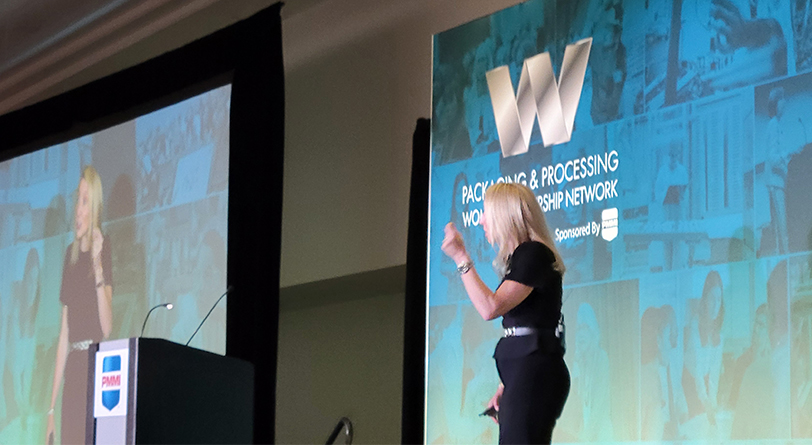
Alison Fragale, Ph.D., speaks to a filled banquet room at the Packaging & Processing Women’s Leadership Network Breakfast held Sept. 30, 2025, during PACK EXPO Las Vegas.
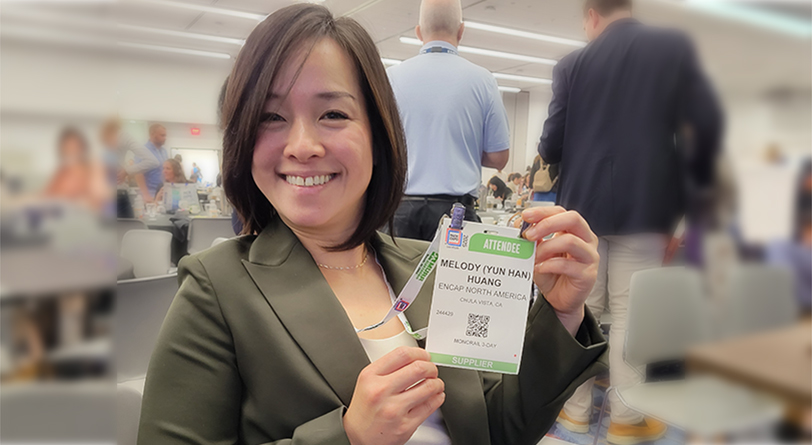
Melody (Yun Han) Huang wants to ensure that her skills as an account manager are better appreciated by clients. The book by Alison Fragale offers tips on how women can better demonstrate their skills and make their successes known through self-promotion.
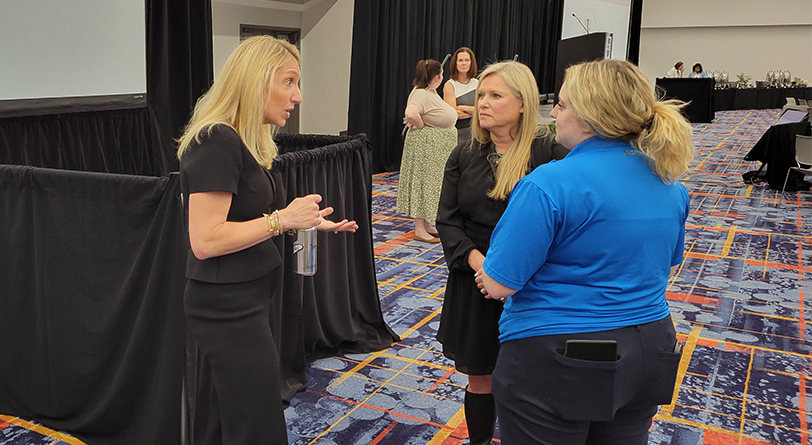
Alison Fragale, author of Likeable Badass: How Women Get the Success They Deserve, talks to attendees after her presentation. Fragale is a research psychologist and professor at the Kenan-Flagler Business School at the University of North Carolina.
Photos by Thomas A. Barstow.
Caring and Capable
One goal would be to become known as “caring and capable” and to send that message as much as possible in authentic ways, she says. Women can do so by overcoming hesitancies to self-promote, she suggests.
“We are the most important source of communication about ourselves,” Fragale says. “We want to make sure that the communication signals we are sending are the right signals—I am really caring and really capable.”
One approach is to self-promote in an engaging way, such as taking simple interactions—for example, a colleague asking how your day is going—and offering more than a routine response like “fine.” Instead, be prepared to share interesting stories from the day that demonstrate your abilities but also show how those successes might have helped others.
“When we think about starting to tell our stories, the notion of self-promotion is not a word we like, and I don’t like it, either, even though I study it,” she says. “But self-promotion is not a 30-minute monologue of your resume told to people who have no interest in listening to it. Telling your story is about these small moments that we reclaim, including having something interesting to say when someone asks, ‘How are you doing?’ ”
A lot of people struggle with talking about their accomplishments, she notes. But you can find ways to brag about yourself while bragging about other people—something known as dual promotion, she says.
Some Tips and Suggestions
She mentions someone who receives a standing ovation after a presentation. That person might have difficulty talking about how wonderful it was to experience that response. If they can weave in praise for how others had made the event possible or otherwise contributed—such as the great job done by the organizers—talking about it can feel more natural.
“When we do this, what we see from the science is that it is a great status-boosting move because you are hitting on capable and caring at the same time,” Fragale says.
Women often are asked to do work that lacks status, she also points out. Her advice is to perform the task or job well and then find a way to highlight that success, whether through an email or other communications to those interested in knowing how the event went.
An out-of-office message is another tool that can be used to smartly communicate accomplishments, rather than merely mentioning the mundane date you will return to the office. A more creative message might mention your dedication to clients, for example, and how you will get right back upon your return. That might reach people who become curious about you and then seek to find out more.
There are many ways to tell your story, she adds.
“We don’t have to use all of them, but, as we start to think about all the ways our story gets told, we find lots of opportunities through our natural daily life to tell a stronger story about ourselves that signals to the world we are caring and capable,” Fragale says.
While life experience might suggest that people talk about you in negative ways when you are not around, she further points out that the opposite is true, too. Getting people to talk about you positively can be encouraged with three actions:
- Meet more people to build your network and to create the potential for more positive comments. “You never know when someone is going to open doors for you,” she says.
- Make sure that people know that you are capable and caring, which might involve demonstrating that you can be helpful to others. That might mean highlighting a skill that is not core to your profession. For example, someone might be great at social media outside of work, so they can use that skill to help others do their jobs better at work.
- To get others to talk you up, you might consider telling their positive stories first.
“If you take nothing else from this morning, what I want you to remember and what I want you to do is to become an evangelical talker-upper of all the great things that you see people around you do,” she suggests. “It’s a fun way to live—to support other people and to be an ally. But it is also strategic for managing our own status because human behavior is reciprocated—what people do for us, we want to do for them.”
Fragale’s presentation touched on many of the main themes from her book, Huang says. The goal will be to apply the tips in her own interactions.
“Women do a lot of work but are not positioned to self-promote,” Huang says. “That’s a real thing, and most women don’t realize it. Alison really helps with that.”
Thomas A. Barstow is senior editor of FlexPack VOICE®.
Sidebar: Two Leaders Offer Insights Into Mentoring Women
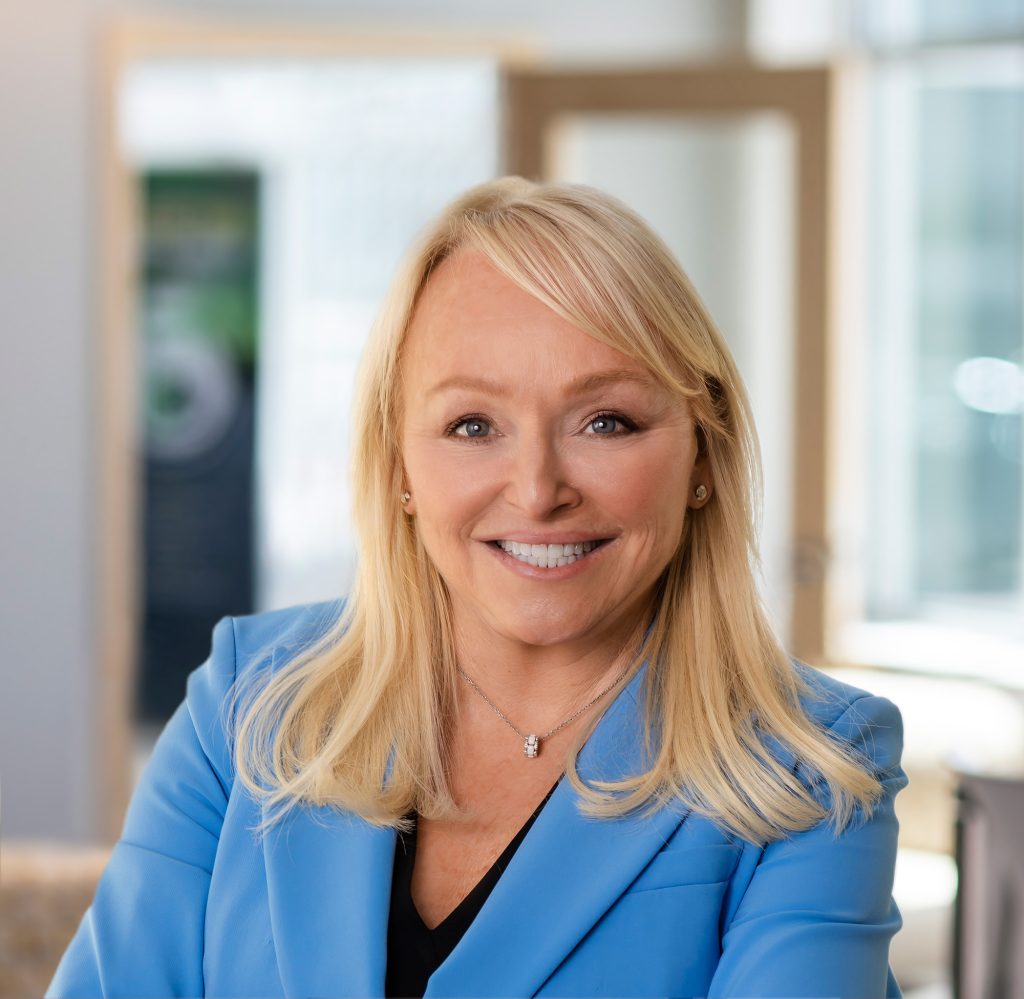
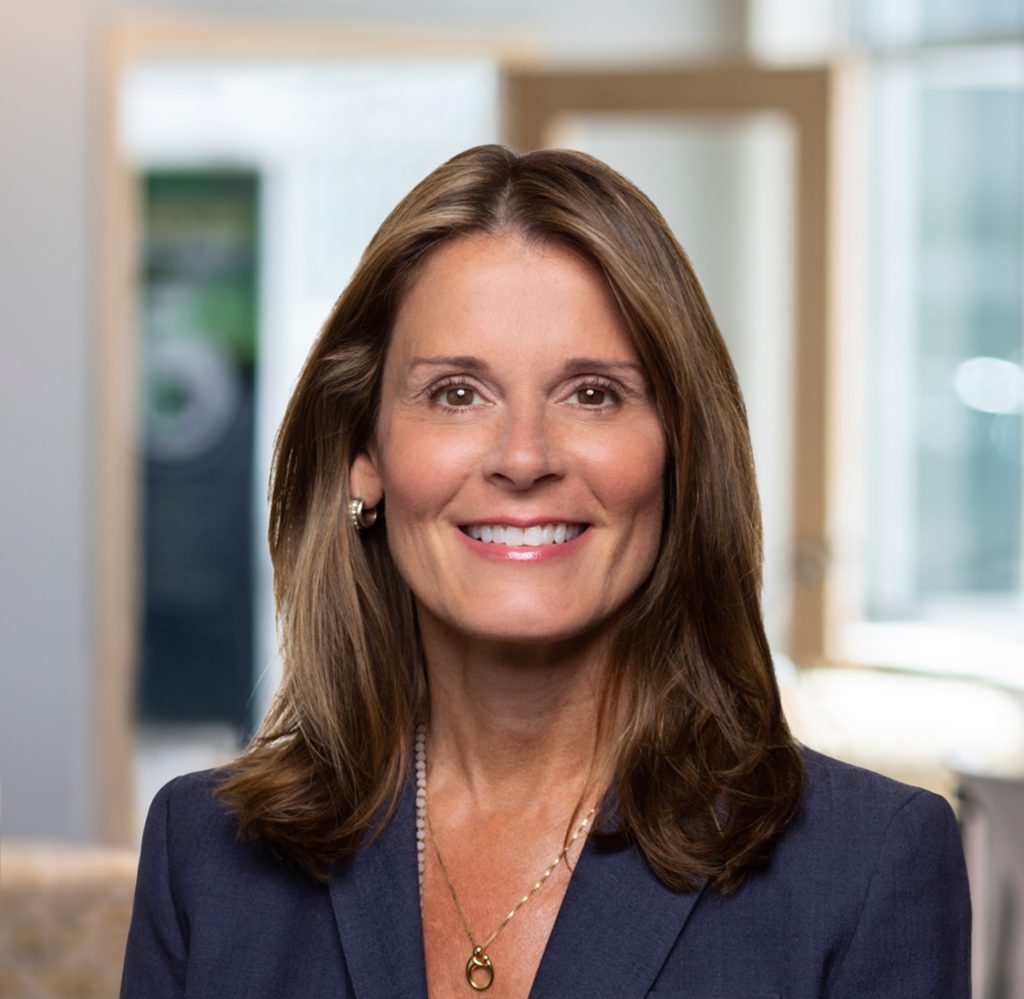
Recruitment and retention of solid workers remains a critical issue for members of the Flexible Packaging Association (FPA). Oftentimes, finding the right people for the right jobs starts with mentoring and coaching years before someone might be ready for more responsibility.
At Charter Next Generation (CNG), those values start at the top, particularly when it comes to encouraging women to accept more responsibility after they have proven they are capable, says Kathy Bolhous, chair and CEO of the Chicago-based company. CNG is intentional about creating an environment where women grow in both skill and self-confidence, translating that belief into innovation, progress, and meaningful results, she says.
“Supporting women in manufacturing has been both a personal and professional priority throughout my career,” Bolhous says. “Mentorship is more than advice—it’s advocacy. I make it a point to champion talented women by creating visibility and opportunities that make them stretch and recognizing their contributions.”
Too often, women are qualified but unseen, she suggests.
“I see part of my role as helping them be seen, heard, and valued—and, most importantly, helping them build belief in their own capability to lead,” Bolhous says. “I often tell people to dream big, then dream bigger—because that mindset can be the unlock for so many. There’s always room to grow, to stretch, and to never stop believing in what’s possible.”
Mentoring Others
CNG’s chief operating officer is Lisa Alteri, who took on the newly created role in June 2025, after serving as the company’s chief growth and strategy officer. Alteri has more than 30 years of experience, including leadership roles at Kraft Heinz.
“For me, mentorship is part of everyday leadership. I believe in intentional accessibility—being someone women know they can reach out to for perspective, encouragement, or a real conversation about challenges,” Alteri says. “I regularly check in with women across functions, especially those newer in a role or stepping into greater responsibility, to listen, coach, and help them navigate complexity with confidence.”
Mentorship doesn’t need to be formal, she adds.
“Often, a single honest conversation can shift mindsets and unlock beliefs in what is possible,” she explains. “Beyond my own team, I intentionally seek out and build connections with women across the industry—including customers, suppliers, and partners. Expanding those networks creates opportunities, opens doors, and reinforces that we rise faster when we rise together.”
In written responses to questions, Bolhous and Alteri offered other insights into career success.
“Credibility begins with performance—consistently delivering results,” Bolhous says. “But visibility is equally important. I encourage women to connect their achievements to broader business outcomes. When you frame success through the lens of impact, it becomes purpose-driven rather than self-focused. Confidence isn’t arrogance; it’s clarity about the value you bring.”
FlexPack VOICE®: Why is it important to mentor other women?
Kathy Bolhous: When we invest in women, we strengthen the entire organization and industry. Diverse leadership drives better decisions and better outcomes. Supporting women ensures we’re cultivating a culture of belonging and collaboration—one where everyone’s ideas can thrive. It’s about building resilience, unlocking potential, and creating an industry where future leaders see themselves represented.
Lisa Alteri: Representation fuels confidence. When women see other women leading and succeeding, it encourages them to step forward and grow. But beyond representation, supporting women is simply good for business. Diverse teams make better decisions, bring broader thinking to the table, and reflect the customers and markets we serve. Women also play a significant role in consumer influence and business decisions, which means their perspectives strengthen innovation and relevance. In a fast-moving industry like ours, empowering more voices isn’t just the right thing to do—it leads to better performance and stronger results.
FPV: Are there examples you would like to share about how you were mentored or have mentored others?
KB: I didn’t have a formal mentor early in my career, and in many ways that shaped how I lead today. I had to learn perseverance, self-belief, and how to seek out people who would both challenge and champion me. Later in my journey, I had a boss who once told me, “I see something in you.” He believed I had the potential to go far beyond the role I was in at the time. Those simple words stayed with me—especially during moments when the path felt tough or uncertain. That belief, spoken out loud, fueled my confidence and pushed me forward.
That experience reinforced my commitment to paying it forward—to being the kind of leader I once needed. At CNG, I try to create those same moments of belief for others: giving women opportunities to stretch, lead, and discover their own potential. Mentorship isn’t just about guidance; it’s about building belief. When someone believes in you—sometimes before you believe in yourself—it can unlock what you’re truly capable of.
LA: One of the most meaningful parts of leadership is championing someone’s growth and advocating for their potential. I think back to a colleague who was initially hesitant to lead a cross-functional project because she didn’t feel “ready.” With coaching, encouragement, and a vote of confidence, she stepped up, delivered strong results, and later moved into a broader leadership role.
For me, mentorship is about more than guidance—it’s about advocacy. You can’t just develop talent. You have to open doors for it. That means naming people for opportunities, giving them visibility, and making intentional space for more women at the leadership table. I take an active role in recruiting, developing, and promoting diverse talent because strong teams don’t happen by accident; they’re built through deliberate choices and a commitment to lifting others as you rise.
FPV: Any parting thoughts?
KB: It’s important to remember that supporting women isn’t just a women’s issue—it’s a leadership issue. When we build cultures that value all voices, we create more engaged teams, stronger organizations, and an industry that attracts the best talent.
LA: Self-advocacy and collaboration go hand in hand. When women own their impact and lift others as they lead, it strengthens teams and performance. But real progress also requires confronting unconscious bias. Bias isn’t always intentional, but it influences decisions—especially in hiring and succession. Once you see it, you can’t unsee it, and it becomes a responsibility. As leaders, we must be intentional in creating a level playing field and ensuring that talent decisions are fair, transparent, and based on potential. Change doesn’t just happen—we have to build it.