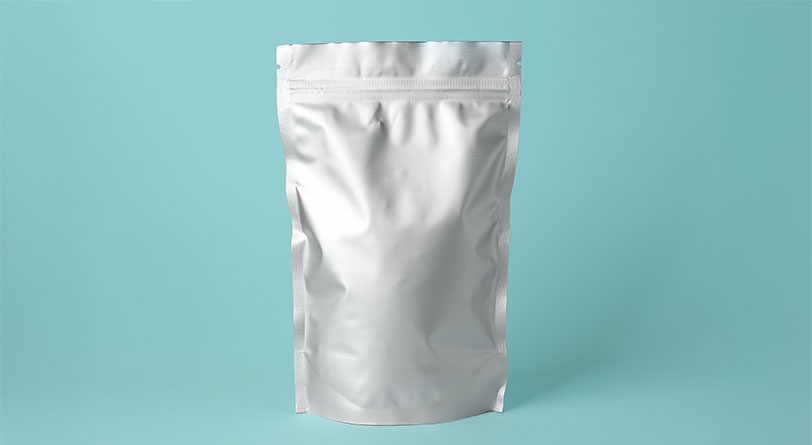
A war is being waged against industrial progress, a quiet assault on the materials that empower human life. It is fought in the name of “sustainability” and “naturalness” by those who find virtue in limitation. They look at a piece of modern, lightweight, flexible packaging—a plastic pouch holding fresh food—and see a pollutant.
They are wrong.
To understand the absolute moral good of flexible packaging, one must reject the anti-human premise that human impact on the world is inherently evil. We must adopt a new standard: human flourishing.
Using the framework of rational egoism, where the highest value is man’s life, and the “human standard of value” championed by author Alex Epstein, it becomes clear that flexible packaging is not a necessary evil, but a technological marvel—a proactive, value-producing triumph of human ingenuity over a hostile natural environment.
The trader principle in packaging
Ayn Rand identified the trader principle as the only ethical basis for human interaction: the voluntary exchange of value for value. It is only the nature of life that makes the concept of value possible. Flexible packaging is a pure expression of this principle in industrial life.
Consider the alternatives: heavy glass, bulky rigid plastic, or inefficient paper. These materials demand high energy to manufacture and high fuel costs to transport.
Flexible packaging, made largely from petrochemical derivatives, uses significantly less material to achieve better results. It is a triumph of efficiency, which is a moral virtue. It takes less to create more, allowing the consumer to pay for the product, not the waste of excessive packaging material.
The producer of flexible packaging is acting in their rational self-interest, creating a superior product that improves upon the limitations of the past. The consumer, in turn, benefits from a lighter, more durable, and more affordable product. It is a win-win, free-market solution that benefits human life, completely apart from the irrational demands of those who would sacrifice human convenience for the sake of “less impact.”
The morality of preservation and abundance
The primary purpose of packaging is to preserve food and industrial products, making them available to more people at lower costs. Flexible packaging excels at this, dramatically extending shelf life through superior sealing and barrier technologies. In doing so, it serves the highest moral purpose: the preservation of life.
The anti-impact cult argues that packaging is waste. The industrial philosopher argues that rotting food is waste.
A bag of frozen vegetables, kept fresh for months, allows a person to thrive regardless of the season or location. A vacuum-sealed pouch of meat allows for safe transport across oceans. The ability to consume fresh, nutritious food is a product of fossil-fuel-powered industrialization, of which flexible packaging is a pinnacle.
To reject flexible packaging is to embrace spoilage, high costs, and reduced access to goods. It is a rejection of the abundance that rational human beings have engineered.
The anti-environmentalism of ‘less’
We are told that “less is more”—that using less technology makes us more virtuous. This is the ultimate “package deal” of our time. The truth, as Epstein has articulated, is that fossil-fuel-driven technology does not ruin the environment. It turns a naturally dangerous environment into a liveable one.
Flexible packaging is superior to traditional materials because it emits two times fewer greenhouse gases, uses six times less water, and produces five times less solid waste in landfills compared to alternatives. It is the most environmentally efficient option precisely because it is the most technologically advanced option.
The goal should not be to make the smallest footprint, but to make the best impact—to harness materials to maximize human longevity and comfort. A plastic pouch that keeps a delicate, high-value medical device sterile is a far greater good than the sentimentality of using a “natural” material that breaks and fails.
Conclusion
Flexible packaging is a symbol of humans ability to rearrange nature for their own survival and enjoyment. It is a triumph of production, a victory of mind over matter, and a clear moral good. It embodies the virtue of self-interest, maximizing value while minimizing waste, and it thrives on the industrial progress that makes human life possible.
We should reject the guilt-driven demands to abandon it. We should embrace flexible packaging as a shining example of a world that is becoming more, not less, human. We should welcome this material not as a necessary compromise, but as a masterpiece of industrial civilization—a testament to the fact that, through industry, we can achieve a higher quality of human life.
Kyle Vafiadis is senior packaging engineer at PPC Flex and a member of the Flexible Packaging Association’s (FPA) Emerging Leadership Council (ELC).
Editor’s note: The views expressed in this article are solely of the author and do not necessarily reflect the views of FPA.